Welcome to the captivating world of Persian cuisine, where every grain of rice tells a story and the crispy, golden bottom layer, known as tahdig, is a prized culinary jewel. For enthusiasts and home cooks alike, achieving that perfect tahdig has long been considered an art form. But what if we told you there’s a kitchen marvel designed to make this exquisite delight effortless? Enter the Persian Rice Cooker, a specialized appliance that has revolutionized how we prepare this iconic dish, bringing the magic of tahdig within everyone’s reach.
What Makes the Persian Rice Cooker Unique?
At its heart, a Persian rice cooker isn’t just another kitchen gadget; it’s a dedicated instrument for culinary perfection. While conventional rice cookers focus on producing fluffy, separated grains, the Persian variant has a singular mission: to master tahdig. Tahdig, meaning “bottom of the pot,” is the delectable, crunchy crust that forms at the base of the rice, celebrated for its texture and rich flavor. It’s a hallmark of Persian hospitality and a testament to the cook’s skill. The beauty of these specialized cookers lies in their ability to take the guesswork and anxiety out of creating this prized crust, allowing both novice and experienced cooks to achieve consistently stunning results.
A Journey Through Time: The Evolution of the Rice Cooker in Persian Cuisine
The tradition of making tahdig predates modern appliances, originating from meticulous stovetop methods. Cooks would carefully manage heat, time, and ingredients to achieve the desired crust. This often involved parboiling rice, then layering it back into an oiled pot to crisp up over low heat. While undeniably delicious, this traditional method was time-consuming and required significant culinary intuition. The introduction of specialized Persian rice cookers brought a much-needed simplification, preserving the cultural significance of tahdig while making it accessible to a wider audience. These appliances bridge the gap between ancient culinary traditions and contemporary convenience, ensuring that the joy of tahdig can be experienced with minimal fuss.
Decoding the Technology: How Persian Rice Cookers Work Their Magic
The secret behind the Persian rice cooker’s success lies in its intelligent design and specialized heating technology. Unlike standard rice cookers, which provide uniform heat, these appliances are engineered to deliver an extra blast of heat specifically to the bottom of the pot. This two-zone heating mechanism allows the rice at the base to crisp and caramelize into a perfect tahdig, while the rest of the rice steams to fluffy perfection above.
Key technological features include:
- Specialized Heating Elements: Designed to create a distinct temperature gradient, ensuring the bottom layer develops a golden crust without overcooking the rest of the rice.
- Customizable Timers: A crucial feature, allowing you to control the level of crispiness. Whether you prefer a light golden hue or a deeply caramelized crunch, a simple knob adjustment dictates the cooking duration and intensity of the tahdig.
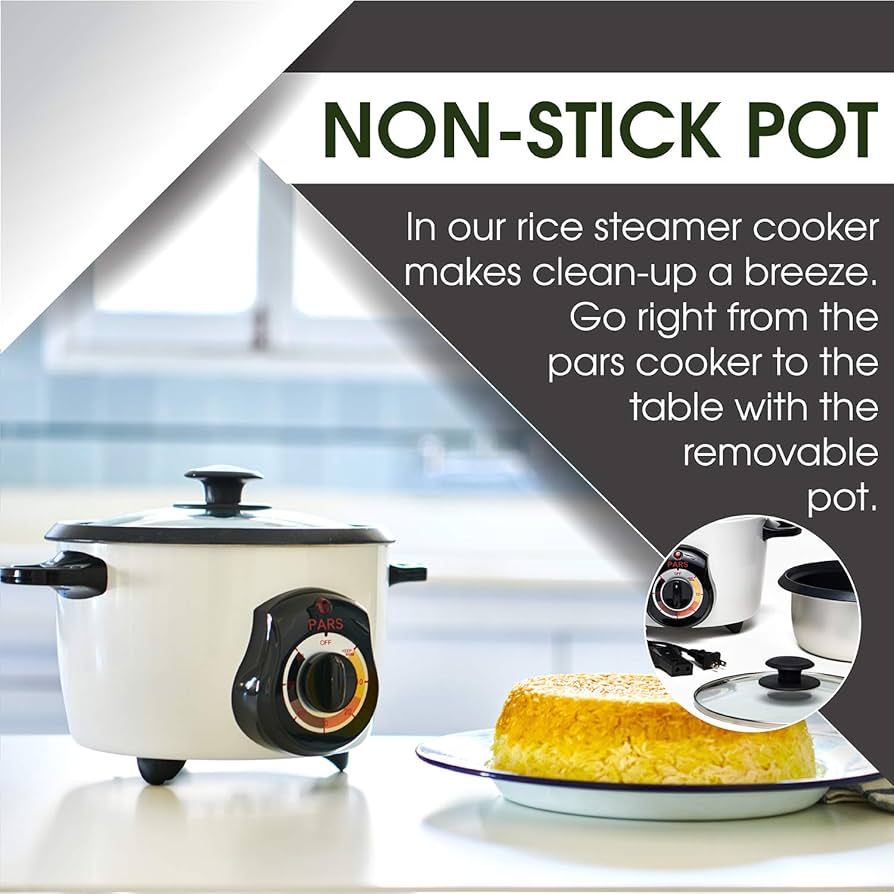
- Non-Stick Inner Pots: Essential for effortlessly releasing the tahdig. These pots ensure that your beautiful crust comes out intact, making serving a breeze and cleanup even easier.
- Auto-Off and Keep-Warm Functions: Once the cooking cycle is complete, the cooker often automatically switches to a keep-warm mode, ensuring your rice stays at the perfect temperature until you’re ready to serve, though for optimal tahdig crispiness, it’s best served immediately.
Popular Persian Rice Cookers on the Market
Navigating the market for a Persian rice cooker can be an exciting journey, with several reputable brands offering excellent options designed for perfect tahdig.
- Pars Automatic Persian Rice Cooker: Often hailed as a top choice, Pars Automatic cookers are renowned for consistently delivering that coveted golden crust. They come in various capacities, from 3-cup models suitable for small families to larger 25-cup versions for gatherings. Users frequently praise their intuitive controls and reliable performance.
- Pars Khazar Rice Cooker: Another highly regarded brand, Pars Khazar is known for its durability and consistent results in making authentic tahdig. These models often feature robust construction and user-friendly interfaces, making them a favorite among Persian cuisine enthusiasts in North America.
- Brentwood Persian Rice Cooker: For those new to Persian rice cookers or seeking a more budget-friendly option, Brentwood offers models that reliably produce crunchy tahdig. These often include variable timers and simple one-touch operations, making them a great entry point.
- Alpine Cuisine and Unique Imports: These brands also offer models that can produce satisfying tahdig, often focusing on features like stainless steel bodies and easy-to-clean non-stick interiors.
Each brand offers a slightly different experience, but all aim to simplify the creation of delicious tahdig. When choosing, consider capacity, timer options, and overall build quality to match your specific cooking needs.
Step-by-Step: Crafting Perfect Tahdig with Your Persian Rice Cooker
Making tahdig in a specialized rice cooker is surprisingly straightforward, turning a traditionally complex dish into an enjoyable process.
- Prepare the Rice: Start with high-quality long-grain Basmati rice. Rinse the rice thoroughly under cold water several times until the water runs clear. This removes excess starch, ensuring fluffy individual grains. Some recipes recommend soaking the rice for 30 minutes to an hour, which can further improve grain separation.
- Add Ingredients to the Pot: Place the rinsed rice into the non-stick inner pot of your Persian rice cooker. Add water (typically a 1:1 or slightly higher ratio, depending on the rice and desired texture), a generous amount of oil (olive oil is common, around ¼ cup for 3 cups of rice), and salt. Give it a gentle stir.
- Set and Cook: Place the pot back into the cooker, cover with the lid, and plug it in. Set the timer according to your desired tahdig crispiness. For a classic, golden white rice tahdig, this typically ranges from 40 to 60 minutes. Brown rice may take slightly longer. The cooker will handle the rest, steaming the rice and forming the crust.
- The Grand Reveal: Once the timer goes off and the cooker indicates it’s done (often by automatically switching off), unplug the appliance. Crucially, allow the rice cooker to cool for about 10-15 minutes. This cooling period helps the tahdig solidify and release more easily. Wearing oven mitts, place a serving platter larger than the pot over the top of the inner pot. With confidence, quickly and smoothly flip the pot and platter together. Slowly lift the pot to reveal your perfectly formed, golden tahdig.
Tips for Success:
- Protect the Non-Stick: Always use a soft sponge for cleaning and avoid metal utensils to prevent scratches.
- Serve Immediately: Tahdig is at its crispiest right after cooking. Its crunch can diminish if left to sit for too long.
- Experiment with Oil: The amount and type of oil (butter, ghee, or a mix) can impact the tahdig’s flavor and crispiness.
- Saffron Infusion: For an extra layer of flavor and a beautiful golden hue, add a pinch of bloomed saffron to the oil at the bottom of the pot before adding the rice.
Beyond Basmati: Exploring Versatile Recipes
While basmati rice tahdig is the star, Persian rice cookers are surprisingly versatile. You can experiment with various ingredients to create unique and delicious variations:
- Yogurt Tahdig: Mix a few tablespoons of plain yogurt with a little rice, oil, and saffron (optional) to form the bottom layer for a tangy, extra-crispy crust.
- Potato Tahdig: Thinly slice potatoes and arrange them in a single layer at the bottom of the oiled pot before adding the rice for a delightful potato crust.
- Saffron Tahdig: For a truly luxurious touch, infuse more saffron into the initial oil and water mixture for a vibrant, aromatic tahdig.
- Mixed Rice Dishes (Polow): Many traditional Persian mixed rice dishes, such as Adas Polow (lentil rice) or Lubia Polow (green bean and meat rice), can be adapted for the Persian rice cooker, ensuring a delicious tahdig with every meal.
- Other Grains: While designed for rice, some users successfully experiment with other grains, though results may vary.
Choosing Your Ideal Persian Rice Cooker: A Buyer’s Guide
Selecting the right Persian rice cooker means considering your specific needs and culinary ambitions.
- Capacity: Cookers range from small 3-cup models (producing about 6-9 cups of cooked rice) perfect for individuals or small families, to large 25-cup commercial-grade appliances. Think about your typical serving size and how often you entertain.
- Timer Options: While most have adjustable timers, some offer more granular control or preset options for different crispiness levels. Consider if you prefer a simple dial or more precise digital settings.
- Pot Material: Non-stick aluminum is standard and effective. Ensure it’s a high-quality non-stick coating for durability and easy release.
- Ease of Cleaning: A removable, non-stick inner pot is paramount for hassle-free cleanup. Dishwasher-safe components are a bonus.
- Budget vs. Investment: While more affordable models exist (e.g., Brentwood), investing in a highly-rated brand like Pars or Pars Khazar often guarantees superior performance, longevity, and consistent tahdig quality.
Expert Insights: What the Pros Say
“The Persian rice cooker is a game-changer for anyone who loves tahdig but is intimidated by the traditional stovetop method,” says Dr. Kian Shah, a leading Culinary Engineer at Reviewpodia.com. “Its precise temperature control and specialized heating zones simplify a complex culinary process, allowing home cooks to achieve a perfect, golden crust every time. We’ve seen incredible advancements in these appliances, making them more user-friendly and reliable than ever before. It’s a testament to how technology can honor and enhance culinary traditions.”
Frequently Asked Questions (FAQ)
Can I make tahdig in a regular rice cooker?
While you can cook rice in a regular rice cooker, it is not designed to create the distinct, crispy tahdig crust. Persian rice cookers feature specialized heating elements and timers specifically for this purpose.
What kind of rice should I use for tahdig?
Long-grain Basmati rice is highly recommended for its delicate aroma, fluffy texture, and ability to form an excellent tahdig.
How do I clean my Persian rice cooker?
Most Persian rice cookers come with a removable non-stick inner pot, which should be washed with a soft sponge and mild detergent to preserve its coating. Avoid abrasive cleaners or metal utensils.
What is the ideal crispiness setting?
This depends entirely on personal preference! Many cookers have a dial, and you can experiment with settings (e.g., 40 minutes for lighter, 60 minutes for darker) to find your perfect crunch.
Why is my tahdig sticking or burning?
Ensure you are using enough oil in the bottom of the pot. Also, make sure the rice is properly rinsed and the water-to-rice ratio is correct. If it’s burning, you might be setting the timer for too long or your cooker runs hotter; try reducing the cooking time.
Conclusion
The Persian rice cooker is more than just an appliance; it’s a gateway to experiencing one of the most cherished delights of Persian cuisine: tahdig. By demystifying the art of the golden, crispy rice crust, these innovative cookers invite you to effortlessly bring authentic flavors and textures to your table. Whether you’re a seasoned chef or just beginning your culinary journey, a Persian rice cooker is an indispensable tool that promises consistent perfection and endless culinary joy. So go ahead, embrace the crunch, and let your Persian rice cooker transform your mealtimes into a celebration of flavor and tradition. Share your tahdig triumphs with us and become part of a global community appreciating this incredible dish!